Rwanda: Victoire Ingabire Appoints A Provisional Executive Committee of FDU Inkingi
The Chair of yet-to-be-registered Rwandan opposition party UDF Inkingi (FDU-Inkingi), Victoire Ingabire Umuhoza, deplores the fact that the Kagame administration has delayed the UDF Inkingi Constitutional Congress for the second time. Here is the press release published today March 12, 2010 by UDF Inkingi:
POLITICAL IMPASSE: KAGAME ADMINISTRATION DERAILS OPPOSITION CONSTITUTIONAL CONGRESS FOR THE SECOND TIME.
We are sorry to inform Rwandans and friends of Rwanda that our Constitutional Congress scheduled in Kigali on 12 March 2010 is for the second time torpedoed by President Kagame administration. We express our deepest apologies to hundreds of delegates who travelled from all over the country for all the inconvenience and the humiliations endured.
This is an unacceptable political impasse imposed by the regime to the Rwandan population. On top of other documented threats and political harassments, the regime is confirming its resolve to seal off the political space. Under visible pressure the municipal administration failed to allow the congress that was supposed to convene on 26th February 2010.
In violation of article 5 of the Organic law n� 19/2007 of 04/05/2007 modifying and complementing organic law n� 16/2003 of 27/06/2003 governing political organizations and politicians the Mayor of Nyarugenge (Kigali) ordered, in a letter dated 05th March 2010 that the meeting will be authorized only if the National police confirm that it will carry out its duty to ensure security of the meeting.
In a chicken or the egg dilemma, the police informed us officially in a letter dated 10th March that it�s not their business to authorise political meetings and therefore can�t discuss security details as long as there is no licence to convene issued by relevant administration.
The municipal administration pretends to be under confusing instructions from the Ministry of Local Government, referring to a non existing law transferring the licensing of political meetings to the national police or other security services. Stated thus, the problem seems trivial.The government should understand that peaceful political activities and opposition parties are not a threat to national security.
There is no state of emergency backing plans to put political and civil rights under the police or security apparatus diktat.
Obviously the regime is buying time to shy away from any serious competition.
All those deceiving manoeuvres endanger the credibility of the looming presidential election and consequently the legitimacy of the results. The country will slide deeper into a volatile transition.This is happening in a background of an unpredictable security situation with the arrest of an opposition political figure, Deogratias Mushayidi,; arrests or exile of some senior military officers; explosion of grenades in the Capital city; night military road blocks; serious threats against international Human Rights observers.
Taking into account the obvious lack of goodwill from the government to open the shrinking political space;
Disappointed by a lack of pressure from the main partners of Rwanda and the international community on the political impasse and the deterioration of the security situation 4 months before the 2010 controversial presidential election;
Determined to pursue our non-violent struggle for democracy in our country,
The UDF INKINGI has decided to appoint a provisional executive committee as follows:
* Ms. Victoire Ingabire Umuhoza, Chair
* Mr. Boniface Twagirimana, Vice President
* Mr. Sylvain Sibomana, Secretary General
* Ms. Alice Uwera, Treasurer
* Ms. Madeleine Mukamana, Social Affairs, Human Rights and Gender
* Mr. Pascal Ntirenganya, Economic Affairs
* Mr. Gratien Nsabiyaremye, Youth and Community DevelopmentVictoire Ingabire Umuhoza
Chair
UDF INKINGI
March 12, 2010 No Comments
Victoire Ingabire Is A Breath of Fresh Air In The Oppressive, Repressive Dictatorship In Kigali
Ingabire is a breath of fresh air in the oppressive, repressive dictatorship in Kigali. Why is Kagame and his friends afraid of JUSTICE that she seeks? They instead chose to twist her demand for justice as revisionism.
You can always count on Kagame, and Rwandan government to have apologists by the dozens. They do a good job of:
1. Justifying GROSS HUMAN RIGHTS ABUSE by pointing to economic development. None of these apologists can articulate how economic prosperity justifies murdering human beings by the millions!
2. They do a good job of justifying the invasion of Congo. They justify over 5 000 000 innocent people by pointing to Hutu Militias operating in eastern Congo. Rwanda invaded Congo and fought Uganda in Congo TWICE. When did Ugandans become Hutu extremists? Five million people killed in Congo, how come they don’t go after the genocidaires and instead go after the Congolese.
3. They do a good job of ignoring that since the invasion of Rwanda in 1990 by Kagame and his RPF, over 300 000 people had been killed by the RPF in 1994 and a million people had been internally displaced. They talk about reprisal killings but IGNORE the Hutu Twa’s and Tutsis killed by the RPF prior to the Genocide.
4. Kagame’s apologists do a good job of minimizing the Genocide of FIVE MILLION Congolese mostly babies but are quick to highlight the Rwandan genocide. Is a Tutsi life more important than a Congolese life?
5. They are extremely good at using the genocide as a political tool to oppress Rwandans and torture Congolese. They believe in gacaca courts that convict people for not providing the “right” testimony but release confessed killers to live with their victims.
6. They use the genocide to silence all political opponents.
7. They blame the Belgians for bringing ethnicity to Rwanda. Those who claim the MYTH that the Belgians brought ethnicity or created ethnic divide in Rwanda are people who cannot tell the difference between a Tutsi and a Camel.
by Kpete – http://www.theglobeandmail.com/community/?userid=60554107&plckUserId=60554107.
March 12, 2010 No Comments
Can Victoire Ingabire fix Rwanda�s Political Puzzle?
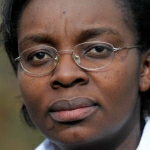
Victoire Ingabire
Little known but committed Victoire Ingabire is a woman of all seasons. She has since her arrival back in Rwanda been trying to familiarise herself with the developments so far in a country she left 16 years ago. A career accountant-turned politician, she hopes, subject to the registration of her political party, to contest the forthcoming presidential election this August. Many agree she stands no chance but her introduction into the Rwandan political fold has already created a few surprises.
Government propagandists under different pseudo names are already engaged in a tarnishing campaign to ensure all she says is never believed. Already, her political aide has been arrested and jailed over a Gacaca court conviction that Ingabire�s supporters and sympathisers believe is faked.
But as Kagame prepares to assume yet another seven year term, the world has been introduced to a politically charged mercenary type of society where opposition politics is only present on paper. It appears Kagame and his men are more at ease with the already established and very disorganised nine political parties who they know and have always controlled so easily. They are not ready for a party whose leader has been brave enough to raise critical issues. As part of a more detailed story to follow in one of the leading newspapers in the UK, I asked Ingabire about her thoughts on recent events:
You have been a subject of constant criticism from several government spin doctors and there is every indication you may not get to register your party, do you still believe it is possible?
I have indeed been subjected to all sorts of harassments from government sponsored media and services. But I have so far managed to keep on with my agenda of registering my party. Given the kind of hurdles that I have gone through, I can not rule out any scenario. The government may reject the registration application of my party on flimsy reasons, in order to hang on power. It is clear that the ruling party is not ready for competition of ideas, in a genuine multiparty system.
The fact that one of your aides has been charged with a genocide crime and imprisoned as a result must surely make you doubt and fear for your life. How has the events of the past weeks affected your overall desire to bring to Rwandans what you think they deserve?
The rough beating and subsequent arrest and detention of Joseph Ntawangundi brought to limelight the true colour of our government. In a rule of law, we expected the assailants to answer for their deeds, more so when the government claimed that they had been arrested. Instead, the victim was arrested and jailed, as if to cover up the assailants. We were both targeted by the mob and I narrowly escaped. I would have been equally beaten if I had been caught. Yes I fear for my life, as any human being, but this will not derail my desire and determination to bring changes in Rwanda.
You are a strong lady, aren�t you? Who is Victoire Ingabire?
I can not gauge my strength, I leave it to others. As for my background, I am 42 years old, married and mother of three children. I hold a degree in Commercial and business administration which I got in Holland, where I worked in private sector. I majored in Enterprises management. My political career started in late nineteen. I was also involved in many NGO�s activities. I believe in no violence as a way of bringing political changes.
Elections will be here in 6 months time but yet one would think Uganda will be voting earlier than Rwanda. What do you think is the reason for no morale about the coming elections in Rwanda?
Previous elections held in Rwanda in 2003 and 2008 were marred by massive rigging. This was confirmed among others, by EU observers in their report. Since the composition of the electoral commission has not fundamentally changed, there is no guarantee of a more transparent election. This is the reason why we are calling for a broad based electoral commission and an electoral code that has the blessing of all political parties involved in the election. The ruling party can not be a judge and jury. The recent resignation from the ruling party of the chairman of the electoral commission is a mere smoke screen move, to hoodwink donors and it is our prayer that some of these things get sorted out. He still is member of the party which does not change much.
Reports from both Human Rights Watch and Amnesty International seem to hint on the excessive lack of political space in Rwanda viewing dissent as anti-progress. Is that a view you share especially after spending a few weeks in the country now?
I totally share the assessments of HRW, as far as political space is concerned in Rwanda. Freedom of expression and equal access to public and private media is paramount for democratic elections. No issue should be a taboo. People should be free to challenge the government on its achievements and generally the way it conducts its affairs. Government critics should not be treated as enemies of the nation, but as watch dogs. Democracy is a universal commodity. It should not be twisted merely to suit interest of a group or political organisation. This is what I am struggling for.
There is this allegation that FDU-Inkingi is connected to FDLR which has been labelled a terrorist organisation by the US, tell us this is true?
These are fabrications aimed at tarnishing my image and delaying the registration of my party. Of late, government lobbies have been going around, brandishing a UN experts report as evidence. This UN report which by the way was heavily criticised by Tanzania and Burundi, is so biased that it went to the extent of saying that the commander in chief of FDLR is my brother! This is rubbish? The report further alleges that I am connected with FDLR because I attended a meeting with FDLR members in Barcelona. The so called Barcelona meeting took place under the auspices of a Spanish NGO and was attended by Rwandan of all ethnic groups, including RPF well known individuals from Rwanda. This can be cross-checked from the minutes of the meeting. The agenda of the meeting was to see ways and means of organising an inter Rwanda dialogue. How came these RPF members who attended the meeting are not labelled FDLR supporters? The truth of the story is that the government does not want a true dialogue and want to demonise any dialogue initiative that is not under it iron fist. Had the Barcelona meeting been a conspiracy meeting, the organisers would have not invited delegates from Rwanda including staunch supporters of the ruling party.
What do you want and wish for Rwanda?
Peace, stability and reconciliation. I don�t want to see any more Rwandan being killed as a result of his ethnic, religious, region or political origin. I don�t want to see any more Rwandan seeking asylum abroad, or living in makeshift camps around Africa or being hunted like animals in neighbouring countries.
I want an independent judiciary and state machinery that pays allegiance to a cause, a nation, and no more to an individual or political organisation. I want a Rwanda where there is a rule of laws and equal economic opportunities. This is my dream.
After the attack on you a few weeks ago, do you now feel safe? We read in the papers that you have written to the president for security, what is the latest on this?
It is the duty of any government to ensure security for its entire citizen. This is what I expect from my government. I am not begging for favours.
If winning had to be about you (FDU) merging with the Green Party of Rwanda, and that is of course assuming that you both get registered, would you welcome a coalition?
Let�s not cross the bridge before reaching it. For the time being the issue does not arise. But I can assure you that I will support any move that can bring changes in Rwanda. I am not struggling for my own ego, but for the good of my countrymen. I share the Green party thirst for freedom and democracy.
Eleneus Akanga – http://ellyakanga.wordpress.com/
March 11, 2010 No Comments
President Kagame Dismisses Commonwealth Critics
London: President Paul Kagame on Monday dismissed criticism that Rwanda does not meet Commonwealth standards on human rights and media freedoms � saying there is �a lot� Rwanda can contribute to the block, RNA reports.
�I think the Commonwealth is a family where there are many failings, and failings don�t come from only one part of that family,� he told a press conference at the Commonwealth Secretariat next to Secretary General Kamalesh Sharma and Trinidad and Tobago PM Patrick Manning.
�Each family has its own failings, but when they come together, then they share good practices to overcome those failings, and that is why Rwanda sees it as very important to be part of the Commonwealth,� said Kagame.
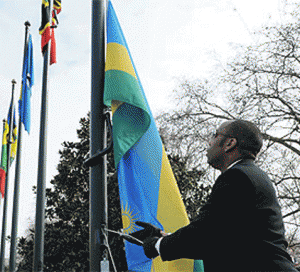
Rwanda�s flag raised at the Commonwealth
The President is in London where he oversaw the rising of Rwanda�s flag at the Secretariat � becoming the 54th. The membership, however, has not come smoothly. The campaign group Commonwealth Human Rights Initiative (CHRI) fiercely opposed Rwanda�s entry arguing that the country needed to clean its house before. The group said the country�s rights record was lacking.
In a statement ahead of the visit, it urged the Commonwealth SG to insist that Kigali �makes every effort to create genuine democratic political atmosphere in the country prior August 2010 elections�.
�We call upon the Commonwealth Secretary General Kamalesh Sharma, in his meetings this week with President Kagame, to urge him to ensure that in these first Rwanda elections as a Commonwealth member, the standards are patently free and fair and in compliance with Commonwealth values,� said Mr. Maja Daruwala, the CHRI director.
For President Kagame, though, there is �a lot we are going to gain from� the British block: �There is also a lot we are going to contribute to the wellbeing of the members of the Commonwealth�.
Mr. Kagame also dismissed claims that media freedoms in Rwanda are lacking - with journalists fleeing the country to neighbouring countries. He said the judicial system handles journalists like other citizens.
�We have had journalists in Rwanda who have killed people in the genocide. It has not spared them that crime because they are journalists, so when they do that they are brought to justice like any other human beings or citizens to be held accountable. We have had journalists who have been involved in other crimes,� he argued.
He rejected the categorization that the media rights situation was worse in Rwanda compared to its neighbours, saying it was a �general problem�.
�However, freedom of expression through the media, the press and so forth is something that goes on, that grows from one situation and develops for the better in the whole region as is the case with Rwanda,� he said.
Indicative of the interest with which Rwanda�s presence at the Commonwealth rises, most of the questions at the press conference were directed at President Kagame.
On embattled Congolese General Laurent Nkunda, in detention here since January last year, President Kagame said Kigali and Kinshasa are making �very good progress.�
The General is trying to challenge his detention in the Supreme Court but even his Canadian lawyer and family are coming to terms with the possibility that the issue can only be dealt with at a political level.
The President said joining the block is an �important milestone in Rwanda�s transformational journey, along which we have already enjoyed the support of many Commonwealth countries�.
Trinidad and Tobago PM, Mr. Manning � also the current chair of the Commonwealth, welcomed President Kagame into the block, describing him as �the newly minted President of Rwanda � newly minted in the context of membership of the Commonwealth � President Kagame.�
Secretary-General Kamalesh Sharma said that from the hard work of the Secretariat, �results were there for everyone to see, particularly the first visit of Honourable President Kagame here�.
In the opening statement, President Kagame set out the plan for Rwanda�s engagement.
�Firstly, the future of all nations depends on their youth, and so I hope that Rwanda can capitalise on the wide range of education and training programmes that the Commonwealth provides.
�Secondly, we hope to tap into the trade and investment opportunities that the Commonwealth offers so that Rwanda can expand its economy and effectively participate in the global marketplace.
�At the same time we believe in mutual learning and Rwanda wishes to play its role in exchanging lessons both from our recent past but also from our traditions and culture.
�Rwanda is committed to the values of the Commonwealth and will contribute to strengthening the organisation, furthering our mutual development agendas and working in close partnership with other members to promote prosperity, freedom and rights for all.�
ARI-RNA – rnanews.com
March 9, 2010 No Comments
Rwanda Formally Welcomed Into Commonwealth
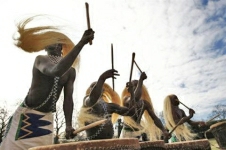
Rwandan dance troupe celebrates in London
Rwandan President Paul Kagame joined celebrations in England as Rwanda was formally welcomed into the Commonwealth Club of Nations.
Rwandan performers opened the Commonwealth Day ceremony with a traditional dance and Rwandan President Paul Kagame addressed the media. “I am pleased to be here on this special [day] as my country, Rwanda, is formerly welcomed into the Commonwealth,” he said.
Rwanda was admitted to the Commonwealth in November 2009, during the biennial Commonwealth Heads of Government Meeting in Trinidad and Tobago.
Mr. Kagame says he wants Rwanda’s youth to benefit from Commonwealth educational and training programs, and hopes his country will gain financially by being a member. “We hope to tap into the trade and investment opportunities that the Commonwealth offers, so that Rwanda can expand its economy and effectively participate in the global marketplace,” he said.
The Commonwealth of Nations is an intergovernmental organization of 54 independent member states. All but two, Mozambique and Rwanda, had a British colonial past or constitutional link to Britain.
Rwanda’s bid to join the Commonwealth began in 2003.
In March the Commonwealth Human Rights Initiative voiced concern over human rights and freedom of expression in Rwanda and said it was deeply concerned at the level of threats to opposition parties before presidential elections set to take place in August. But Rwandan officials said at the time the allegations were without basis.
Mr. Kagame said Rwandan rights will gain from being part of the international organization. “I think the Commonwealth is a family where there are many failings, and failings do not come from only one part of that family. Each family has its own failings, but when they come together then they share good practices to overcome those failings and that is why Rwanda sees it as very important to be part of the Commonwealth. There is a lot we are going to gain from it, there is also a lot we are going to contribute to the well being of the Commonwealth,” he said.
After speaking with reporters, Mr. Kagame witnessed the hoisting ceremony of the Rwandan flag.
Rwandans sang on the grassy lawn of the Commonwealth Secretariat in London as the flag was raised.
Trinidad and Tobago Prime Minister Patrick Manning, who is Commonwealth chairman, and Commonwealth Secretary General Kamalesh Sharma also witnessed the ceremony.
Outside the ceremony, Britain-based Rwandans gathered to mark the occasion.
Many were singing in celebration. Claude Rutsinzi said he thought Mr. Kagame had done much to improve human rights in his country. “I do not accept at this stage really that the human-rights situation in Rwanda is bad, compared even to many many other countries in the Commonwealth,” he said.
But others, like Ambrose Nzeyimana, said they did not think Rwanda should be eligible yet to join the Commonwealth.
“We are not against Rwanda being part of the Commonwealth, but we are afraid that the regime of Paul Kagame cannot stand the democracy that the Commonwealth is expecting from its members,” Nzeyimana said.
Mr. Kagame was also to join Queen Elizabeth for a multi-faith Observance in London.
Voice of America – voanews.com.
March 9, 2010 No Comments
Commonwealth Human Rights Initiatives Express Grave Concerns Over Rwanda Elections
CHRI Press Release-6 March 2010.
CHRI (Commonwealth Human Rights Initiatives) is deeply concerned at the continued restrictions and threats to opposition parties in the run up to Rwanda�s Presidential elections on 9 August 2010 and urges the Rwandan Government to take immediate steps to ensure respect for the basic, universal rights to freedom of expression, freedom of association and peaceful assembly of opposition parties. The absence of these rights is tantamount to breaches of the Commonwealth’s fundamental political principles that insist on free and fair elections (Harare Declaration 1991).
On Commonwealth day, 8 March 2010, CHRI once again brings to the notice of the Commonwealth Secretary General the growing number of concerns surrounding political freedoms in Rwanda. Despite grave representations by CHRI and others about the appropriateness of Rwanda�s readiness for membership, given its record on human rights and its questionable role in the conflict in the Congo, Rwanda was unconditionally admitted to the Commonwealth as its newest member at the Heads of Government Meeting in Trinidad and Tobago last November.
Rwanda�s membership requires that it honours and complies with the Commonwealth�s fundamental political principles which include respect for civil society and human rights. The Chair of a new opposition party, United Democratic Forces (UDF) has written to the Secretary General of the Commonwealth alleging state orchestrated harassment, describing violence against herself and colleagues as well as outlining the restrictive environment facing opposition parties in their electoral challenge to the ruling Rwandan Patriotic Front (RPF).
Under Article 13 of the Rwandan constitution it is an offence to engage in �revisionism� or �negationism� (denial of the genocide). These are so broadly defined to include anyone who disagrees with the ruling RPF�s account of the Genocide. On the 25th of February the Ministry for Security in Rwanda issued a statement saying that any politician who �slanders the country� or is �against public unity� would be punished. In addition the Minister for Local Government has reportedly threatened to crackdown on unregistered political parties who are members of the Permanent Consultative Council of Opposition Parties. Further opposition parties have alleged that the government is making it hard to register by continually changing registration rules; the National Electoral Commission which regulates these matters is controlled by the members of the RPF. A number of opposition parties have also complained that they face repeated harassment from government officials and the members of the RPF.
It is imperative that the Government of Rwanda thoroughly investigates, in a manner satisfactory to opposition parties, the many incidents of intimidation and bring those responsible to justice. It should also ensure that its electoral processes are consistent with UN and Commonwealth standards for free and fair elections.
CHRI urges the Commonwealth Secretary General to insist that the Rwandan government makes every effort to create genuine democratic political atmosphere in the country prior August 2010 elections. We call upon the Commonwealth Secretary General Kamalesh Sharma, in his meetings this week with President Kagame, to urge him to ensure that in these first Rwanda elections as a Commonwealth member, the standards are patently free and fair and in compliance with Commonwealth values.
Maja Daruwala
Director, CHRI
Website: http://www.humanrightsinitiative.org/
March 8, 2010 1 Comment
Rwandan Human Rights Organization, ADL, Under Threat
Kigali – In an article published today under the title “NGO exposed after infighting”, The New Times, mouthpiece of Paul Kagame’s ruling party RPF, labels the Rwandan Human Rights Organization ADL as a “‘negationnists’ network“. For anybody who knows Rwanda, this is an accusation which has to be taken seriously.
ADL stands for Association Rwandaise pour la d�fense des Droits de la personne et des Libert�s publiques.
These accusations reveal how fragile the ADL is now. It is pointed out that the ADL is not properly registered and that its temporary authorization to operate expires in September this year. What does that mean?
Here is what The New Times writes about ADL.
An imminent �negationists� network� operating in Rwanda suspected of coordinating Genocide convicts with fugitives abroad and posturing as a local Human Rights organization, has been exposed by its members after a fall out.
Rwandan Association for the Defence of People�s Rights and Public Liberties (ADL) was formed in 1991 and receives funding from some groups in France.
Its activities involve conducting �shaddy� surveys on Genocide convicts to come up with reports that strongly criticize and abuse government policies.
Recently, members of ADL fell out over management of funds which led to some of them ganging up against the association�s chairperson, Cassien Kasire, and deposing him because he questioned how money was spent.
�It is an extremely negative association operating with outside negative groups against the government and posing as a human rights organization,� Kasire said in an interview with The Sunday Times.
Kasire has been heading the association for the last three years.
�Before I joined this association, people tried to close it and actually there were plans to plot for its closure, but I refused. My aim was to join it and change the radicals in the association,� said the embattled Kasire.
�Things turned out to be different when I got there. I realized that I was working with a team of extremists that could not easily be changed.�
Malicious reports
The association recently released a report on Local Government Performance Contracts and strongly criticized the whole practice.
The report, a copy of which The Sunday Times has obtained, brands the contracts as a �slavery� (uburetwa)
According to Kasire; �When I received a copy of the report I realized that the team that had compiled it had termed the whole exercise as slavery. I immediately called for an executive committee meeting and asked them to change the wording.��During the meeting, my deputy, Leonard Ngerageze, stood up in protest and accused me of having a double mission in the association claiming that I am taking the association to the RPF (party).�
�I told him (Ngerageze) that the aim of the association is not to destroy the country but to help in its construction through promoting human rights,� he added.
He said that the meeting of the Executive Committee ended without a consensus.
The association had received Rwf 5 million from the Great Lakes Human Rights body (LDGL) to conduct the survey.
Another organisation, Forum d�Aide Juridique (FAJ) according to Kasire, recently gave the association Rwf 28 million to conduct a survey on the situation of prisons in the country.
He said that members of the association were divided into different groups to conduct the survey.
�I learnt that Leopold Hakizimana who was working on Kibungo prison was actually doing something different from what we had agreed on;��He was gathering information from prisoners, manipulating it and sending reports to France through a friend called Andr� Barth�lemy who heads an association called AGIR Ensemble that is a strong critic of Gacaca,� said Kasire.
AGIR Ensemble released radical reports after the Nyamirambo Gacaca court sentenced a human rights activist, Francois Xavier Byuma, to 19 years in jail for his role in the 1994 Genocide against the Tutsi.
Barth�lemy is said to be Hakizimana�s brother-in-law-to. Kasire claims that Hakizimana used to send information from prisons to his sister who would pass on the information to the husband.
�I had to stop Hakizimana by removing him from the surveying team. He was working with Beata Uwimpambere who strongly protested on behalf of her colleague. This was a clear indication that there was something fishy going on,� said Kasire.
He added that later, on February 20, Kasire called for a General Assembly to review an audit report on how funds meant for the prison survey were used.
�During the meeting, members of the committee admitted that they had misused the funds and I ordered them to refund the money.
My deputy, Ngerageze acknowledged that he embezzled about Rwf 210,000 but after this meeting, I was surprised to receive a text message from Ngerageze calling for an extra-ordinary meeting,� said Kasire.
He added that he never attended the meeting since it was not important for him and this is the same meeting that resolved to suspend him.
�The committee is organizing a general assembly to lobby for my eviction and I insist the intentions of these people are not promoting and defending human rights. Authorities should investigate this association,� said Kasire.
The Sunday Times learnt that ADL is currently not registered and still uses documents they acquired in 1991.
Recently, it acquired a temporary document from Nyarugenge District which will expire in September this year.When contacted, Ngerageze refuted the allegations and instead blamed Kasire for being a dictator and �the reason why the association was failing�.
�I am surprised he is the one making those claims. He endorsed the performance contract report himself,� Ngerageze said.
�We sent him the report and asked him to make changes which he did not do,� Ngerageze charged.
He also refuted claims that he embezzled and diverted funds of the association.�I have proof that all the funds were properly used. He should produce evidence against me because the audit report clearly shows how we effectively used the money,� he said.
�I personally don�t find any problem with talking to prisoners. We sought permission and got it. This man has a problem that we could not tolerate.�
Ngerageze however could not clearly state the differences between him, the committee and Kasire.
He instead claimed that Kasire is a dictator and that he was not going to tolerate him.
March 7, 2010 No Comments